Home
Food
Other Food Tests
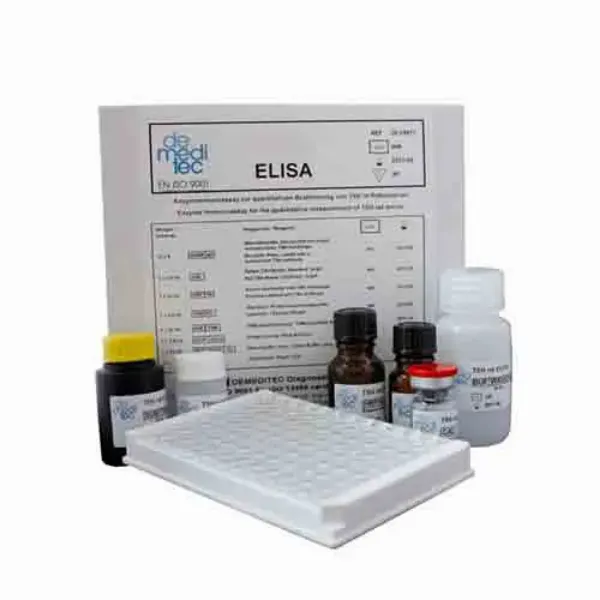
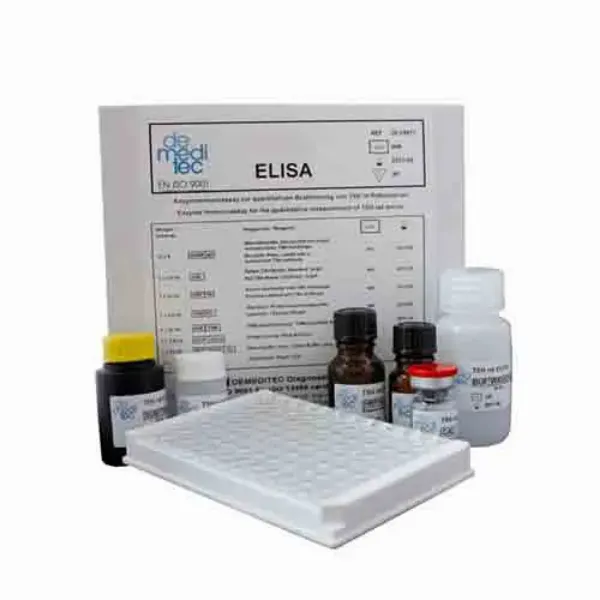
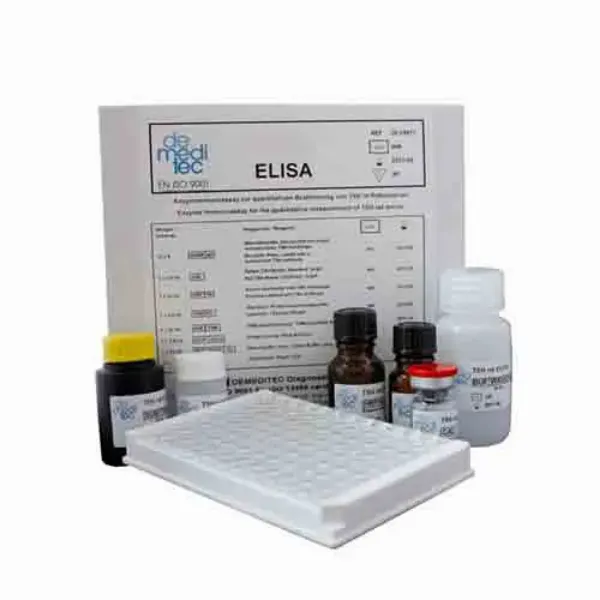
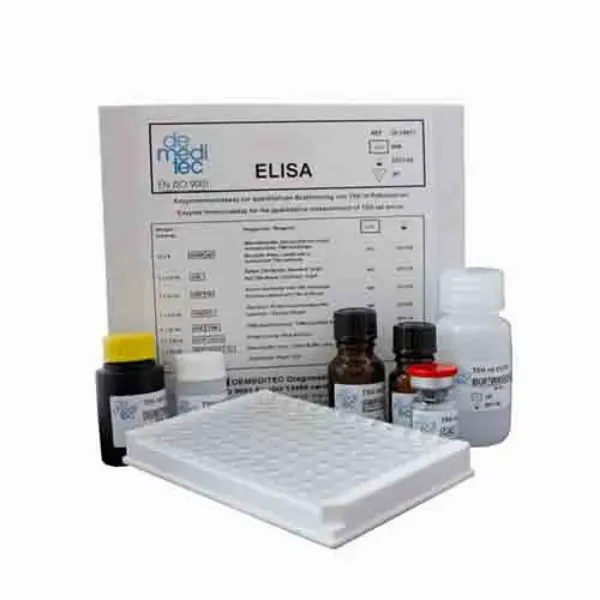
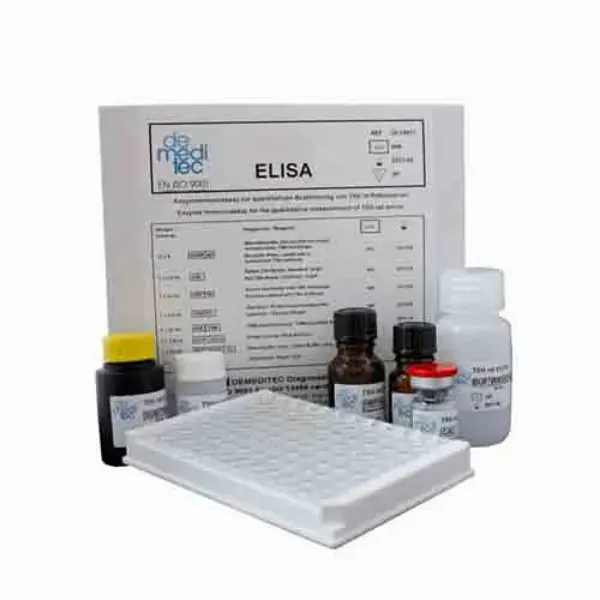
Penicillin ELISA
Penicillin ELISA
Brand:
Diagnostics
Availability:
In stock
SKU:
DEPENE01
Products specifications
Attribute name
Attribute value
Technology
ELISA
Sizes
96 tests
Enzyme Immunoassay for the quantitative determination of Penicillin in milk and shrimps.
Background:
Penicillin was accidentally detected by Alexander Fleming in 1929. The drug belongs to the mycotoxins and is generated by the mould Penicillium chrysogenum. Penicillin as an antibiotic is preferentially used in the treatment of gram-positive bacteria, both for humans and animals. Of all illegally administered drugs, antibiotics are most frequently used in productive livestock. Contaminations in food or milk are ingested by humans, and can lead to severe infections by pathogen germs which became resistant against penicillin, or to allergies. The allergic reactions appear with different severity, dependent on dose and individual disposition, and showing symptoms from urticaria to anaphylactic shock. During routine testing of milk samples for antibiotics, in more than 90% of the positive cases, betalactam preparations or penicillins are detected. The method of choice for the determination of penicillin contamination in food has always been a microbiological assay. These procedures allow however no quantitative determination and no identification of the antibiotic drug, which is achieved by a sensitive ELISA test kit or immunoaffinity columns together with HPLC.
Description:
The Penicillin quantitative test is based on the principle of the enzyme linked immunosorbent assay. A penicillin conjugate is bound on the surface of a microtiter plate. Penicillin containing samples or standards and an antibody directed against penicillin are given into the wells of the microtiter plate. Immobilized and free penicillin compete for the antibody binding sites. After one hour incubation at room temperature, the wells are washed with diluted washing solution to remove unbound material. A peroxidase conjugate directed against the penicillin antibody is given into the wells and after another hour incubation, the plate is washed again. Then a substrate solution is added and incubated for 20 minutes, resulting in the development of a blue colour. The colour development is inhibited by the addition of a stop solution, and the colour turns yellow. The yellow colour is measured photometrically at 450 nm. The concentration of penicillin is indirectly proportional to the colour intensity of the test sample.
Product Features:
- The kit contains reagents for 96 determinations;
- Microtiter plate consisting of 12 strips with 8 breakable wells;
- Penicillin Standards: 0, 4, 10, 40, 100, 400 ng/mL;
- ELISA reader at 450 nm;
- Standard range: 4 - 400 ng/mL;
- Sensitivity analytical: 3 ng/mL.
Similar Products
Tetracycline ELISA
Enzyme immunoassay for the quantitative determination of Tetracyclines in food
0.9739176854491234
Streptomycin ELISA
Enzyme immunoassay for the quantitative determination of Streptomycin in food
0.9632299654185772
Quinolones ELISA
Enzyme immunoassay for the rapid quantitative determination of Quinolones in food
0.9381408169865608
Vitamin H (Biotin) ELISA
Enzyme immunoassay for the quantitative determination of Biotin (Vitamin H) in food
0.8938386514782906
Vitamin B12 ELISA
Enzyme immunoassay for the quantitative determination of Vitamin B12 in food
0.8867433741688728
Cookies help us deliver our services. By using our services, you agree to our use of cookies.
OK
Learn more