


Cookies help us deliver our services. By using our services, you agree to our use of cookies.
Filter by attributes
- Technology
GPS
Sort by
Display
per page
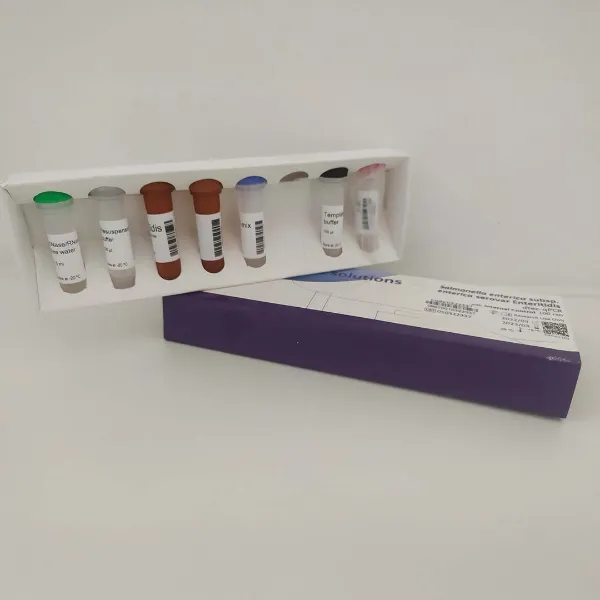
Real Time PCR Detection Kit Theileria luwenshuni
The Real Time PCR detection Kit Theileria luwenshuni comprises a series of specific targeted reagents designed for Theileria luwenshuni detection by using qPCR.
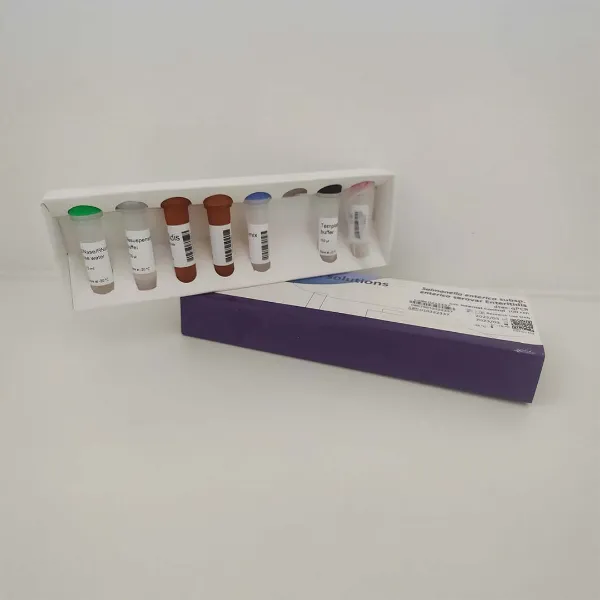
Real Time PCR Detection Kit Theileria orientalis strain Shintoku
The Real Time PCR Detection Kit Theileria orientalis strain Shintoku comprises a series of specific targeted reagents designed for Theileria orientalis strain Shintoku detection by using qPCR.
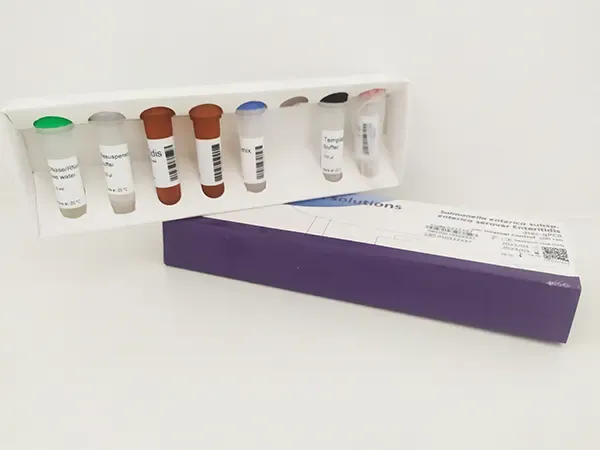
Real Time PCR Detection Kit Theileria spp.
Theileria spp. detection test kit by using qPCR. Theileria is a genus of parasitic protozoan closely related to Plasmodium. The organism is transmitted by various tick species including Rhipicephalus, Dermacentor, and Haemaphysalis. Two Theileria species, T. annulata and T. parva, are important cattle parasites. T. annulata causes tropical theileriosis and T. parva causes East Coast fever. T. equi is a known cause of equine piroplasmosis.
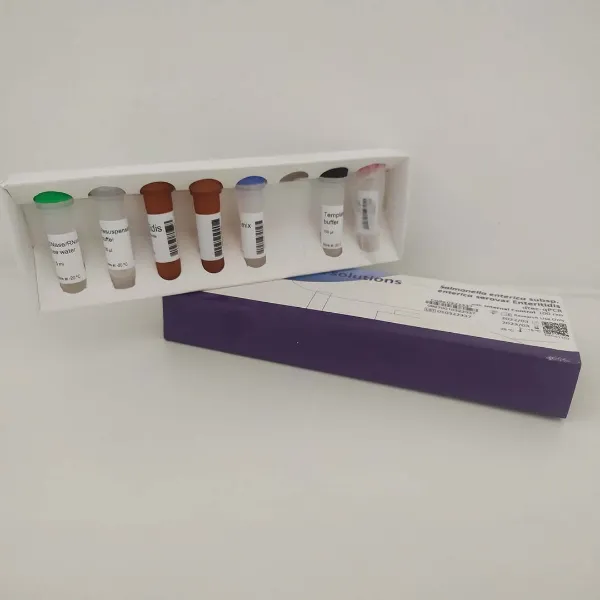
Real Time PCR Detection Kit Theileria velifera
The Real Time PCR detection Kit Theileria velifera comprises a series of specific targeted reagents designed for Theileria velifera detection by using qPCR.
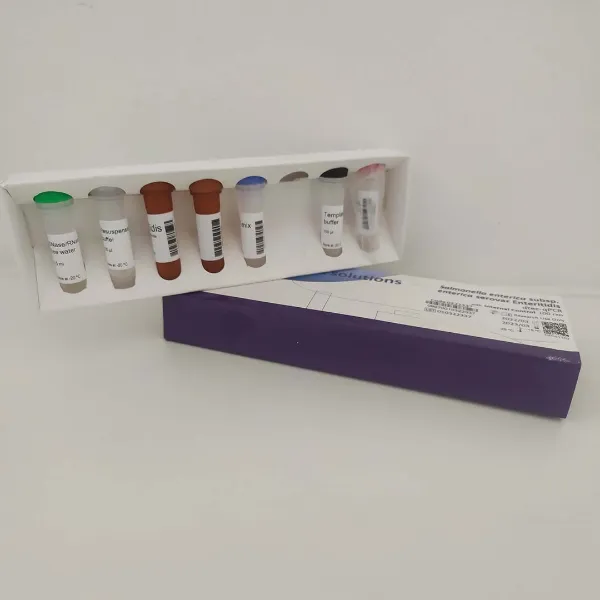
Real Time PCR Detection Kit Tick-borne encephalitis virus (related)
The Real Time PCR detection Kit Tick-borne encephalitis virus (related) comprises a series of specific targeted reagents designed for Tick-borne encephalitis virus (related) detection by using qPCR.
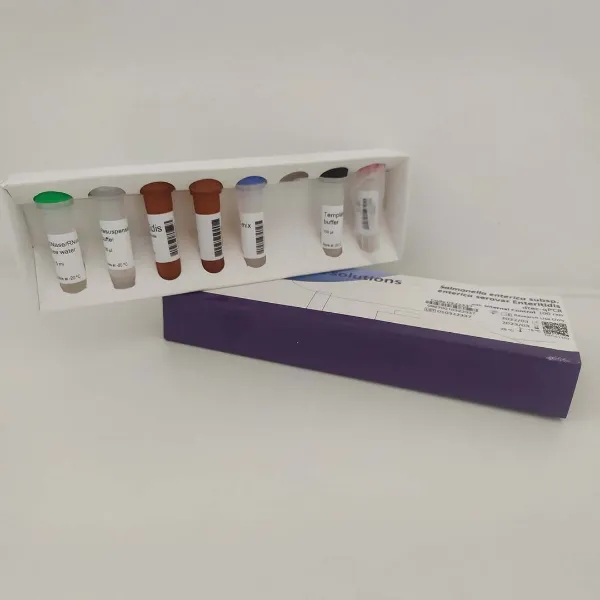
Real Time PCR Detection Kit Tick-Borne Hemoparasites Panel 3 targets
The Real Time PCR detection Kit Tick-Borne Hemoparasites Panel (Ehrlichia spp., Anaplasma spp. and Babesia spp.) comprises a series of specific targeted reagents designed for Ehrlichia spp., Anaplasma spp. and Babesia spp. detection by using qPCR.
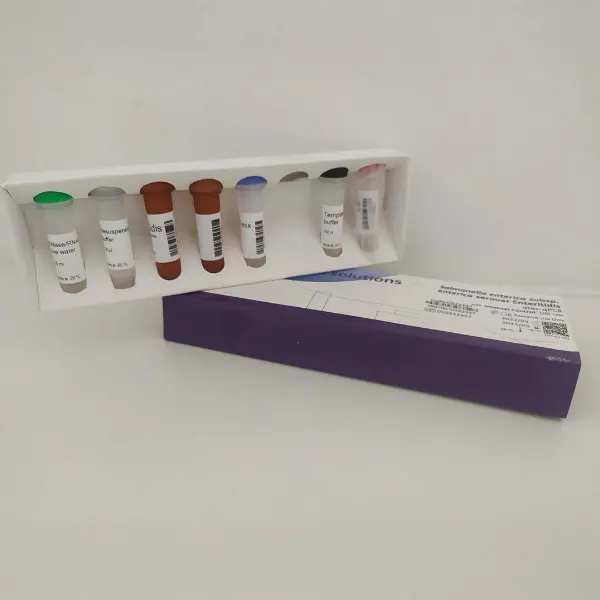
Real Time PCR Detection Kit Tick-Borne Hemoparasites Panel 4 targets
The Real Time PCR detection Kit Tick-Borne Hemoparasites Panel (Ehrlichia spp., Anaplasma phagocytophylum, Borrelia burgdorferi and Babesia spp.) comprises a series of specific targeted reagents designed for Ehrlichia spp., Anaplasma phagocytophylum, Borrelia burgdorferi and Babesia spp. detection by using qPCR.
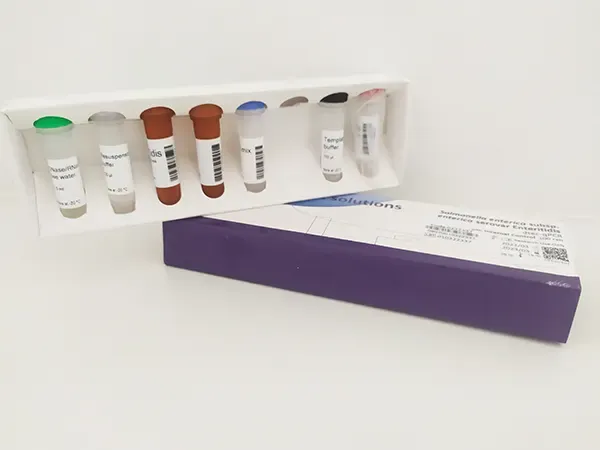
Real Time PCR Detection Kit Total Bacteria DNA
Total Bacteria DNA detection test kit by using qPCR. The bacterial load can be an interesting parameter to evaluate the microbial contamination degree in a sample. Please note that PCR may detect all genomic content, including the genomes from dead cells, and this may result in higher genomic counts with respect to living cells.
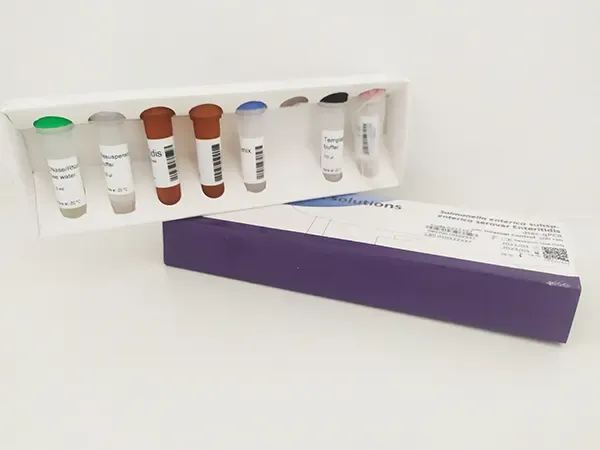
Real Time PCR Detection Kit Toxoplasma gondii
Toxoplasma gondii detection test kit by using qPCR. Toxoplasma gondii is capable of infecting virtually all warm-blooded animals, but felids are the only known definitive hosts in which the parasite can undergo sexual reproduction. In most adults, it does not cause serious illness, but it can cause blindness and mental retardation in congenitally infected children and devastating disease in immunocompromised individuals.
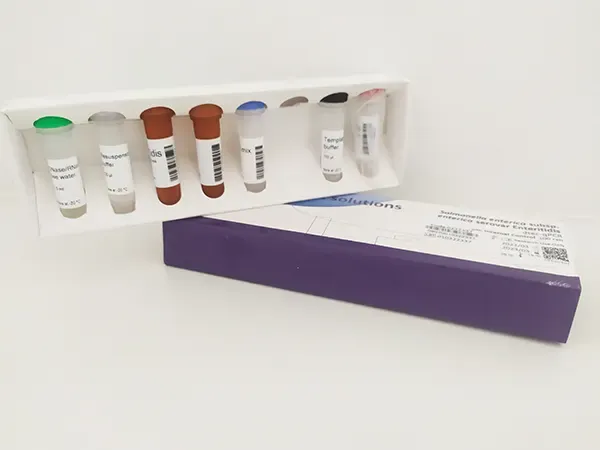
Real Time PCR Detection Kit Treponema denticola
Detection test kit of Treponema denticola by using qPCR. Treponema denticola is associated with the incidence and severity of human periodontal disease. Treponema denticola levels in the mouth are elevated in patients with periodontal diseases and the species is considered one of the main etiological agents of periodontitis.
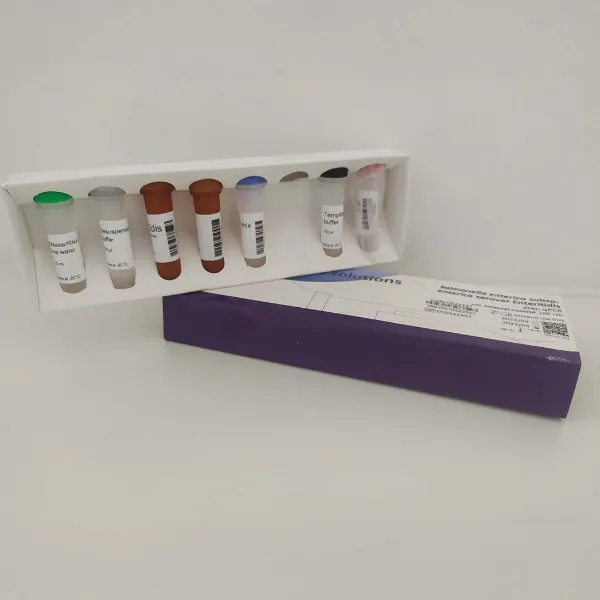
Real Time PCR Detection Kit Treponema pallidum
The Real Time PCR detection Kit Treponema pallidum comprises a series of specific targeted reagents designed for Treponema pallidum detection by using qPCR.
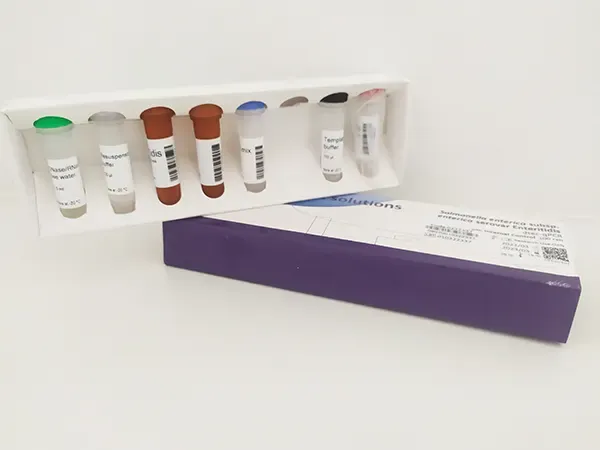
Real Time PCR Detection Kit Trichomonas gallinae
Trichomonas gallinae detection test kit by using qPCR. Trichomonas gallinae is a cosmopolitan protozoan parasite of pigeons, but other birds such as domestic and wild turkeys, chickens, raptors may also become infected. The disease in pigeons is commonly called canker and the same condition in birds of prey is called frounce. T. gallinae is generally found in the oral-nasal cavity or anterior end of the digestive and respiratory tracts. Transmission of the parasite from one bird to another occurs by infected parent feeding young, by contaminated drinking water, or when an infected bird is prey for another bird (raptors most commonly).
Webmaster  Refresh Multimedia
Refresh Multimedia